
The Faculty of Education at the University of Sciences and Arts in Lebanon – USAL took part in the academic conference organized by the Faculty of Arts and Humanities at the Lebanese University, under the theme:
“Humanities and Literature in the Digital Age: Role and Relevance.”
The event gathered a distinguished group of academics and researchers from various Lebanese and Arab universities.
USAL was represented by Dr. Walid Hammoud, Dean of the Faculty of Education, who presented a peer-reviewed scientific paper entitled: “Inputs for the Shift Toward Humanizing the Curriculum in General Education.”
The paper addressed a timely educational issue, emphasizing the need to redesign school curricula to be more human-centered and connected to learners’ needs and societal challenges, particularly in light of rapid digital and technological transformations.
This participation reflects USAL’s commitment to contributing to contemporary academic discourse and strengthening its presence in national and regional academic forums. It also highlights the university’s dedication to offering a critical, humanistic, and responsible education that meets the challenges of the future.
Hearts United 2 at USAL: Bringing Mental Health into Focus
On the occasion of World Mental Health Day, the University of Sciences and Arts in Lebanon -USAL, through its Health and Social Care Office, and
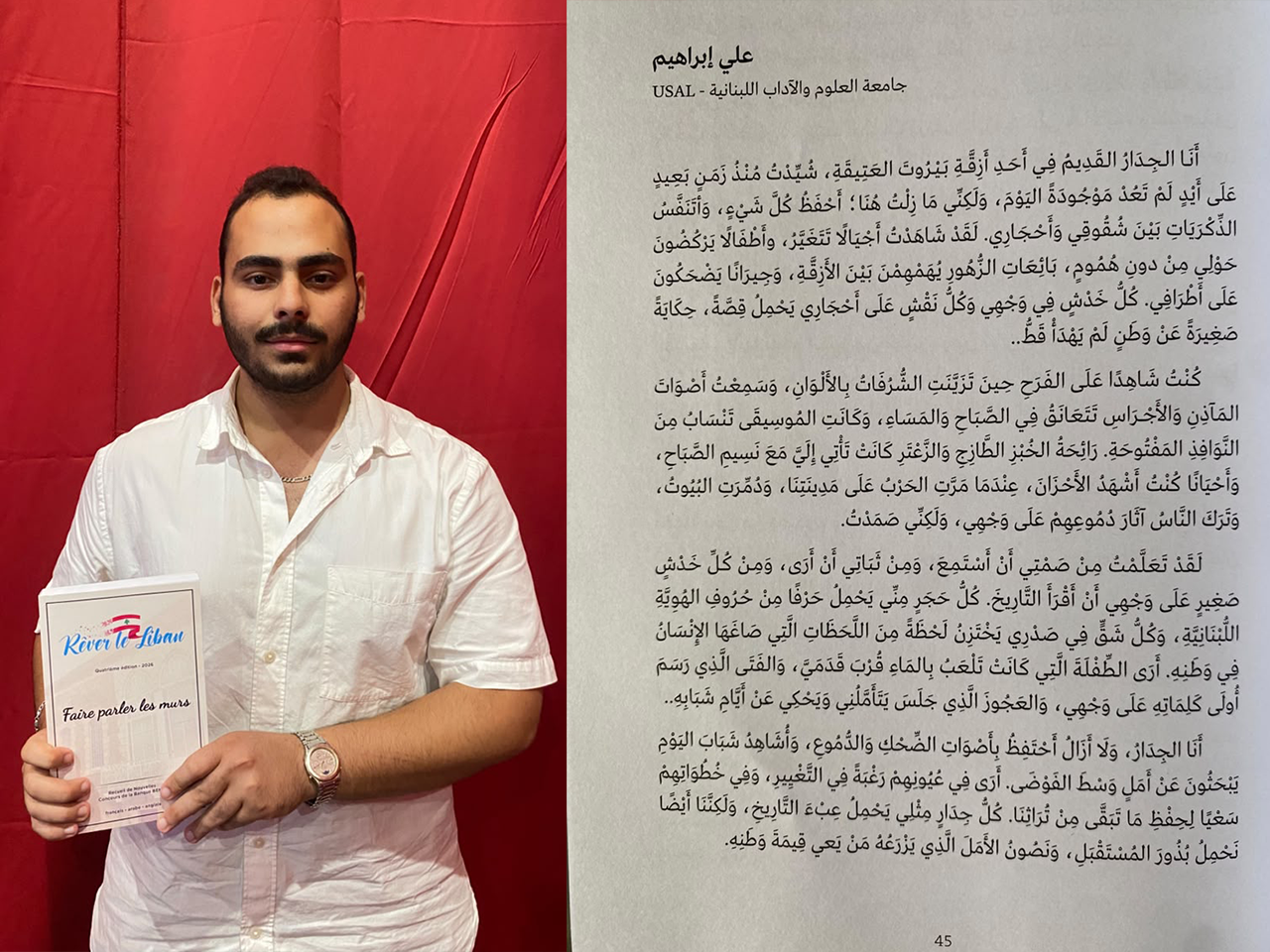
When Walls Speak… Our Students Tell Their Stories
Ali Khaled Ibrahim, a student in the Media Department at the University of Sciences and Arts in Lebanon -USAL, participated in the fourth edition of
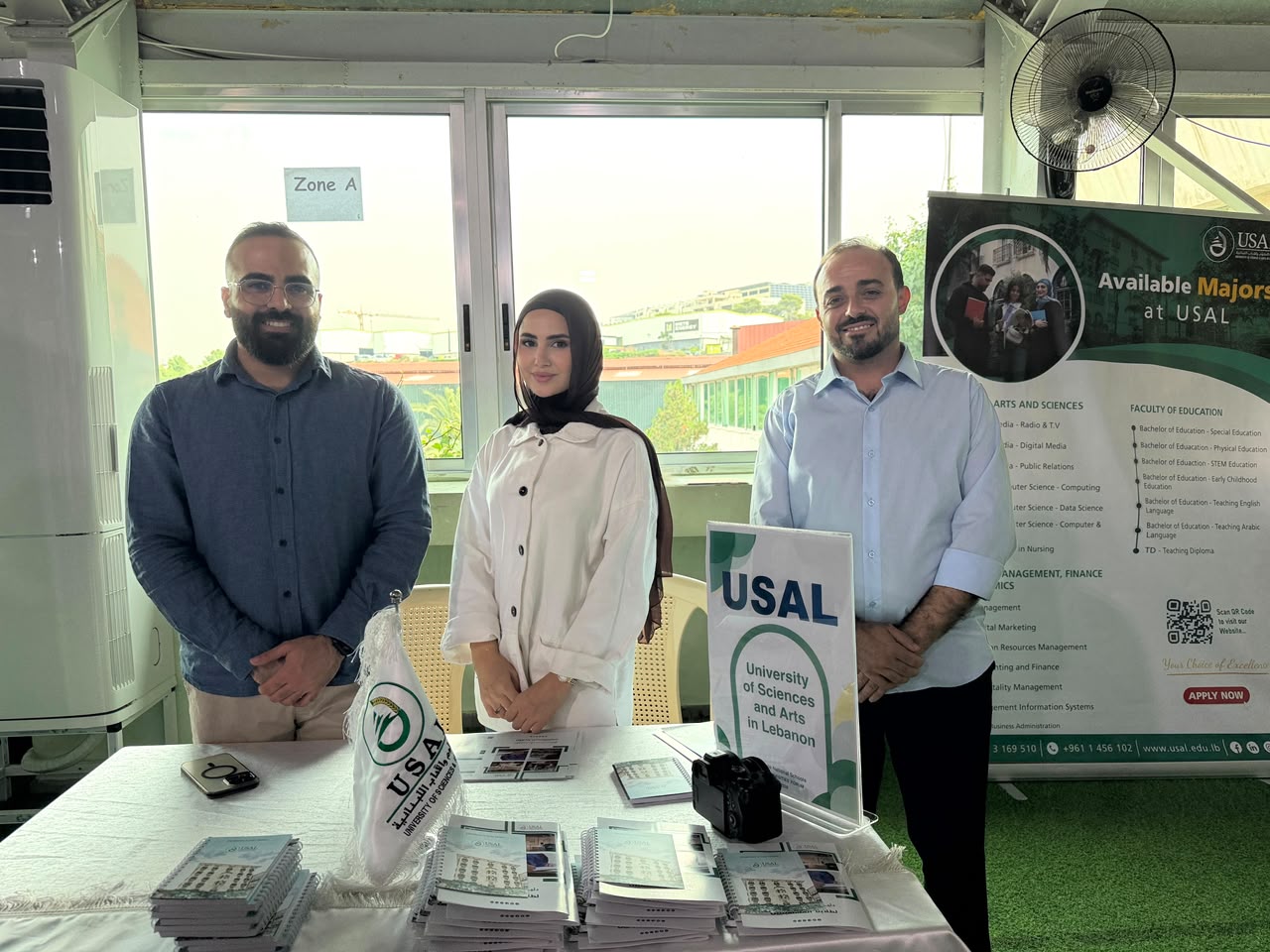
USAL Participates in Universities’ Forum 2026
At the invitation of Lycee National Schools, the University of Sciences and Arts in Lebanon -USAL participated in Universities’ Forum 2026, reflecting its commitment to
 EN
EN  AR
AR